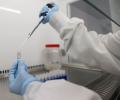
There are 12 sites across India, including private and public hospitals, conducting Phase 1 and 2 human clinical trials for Bharat Biotech's Covaxin. Based on an earlier letter by the Indian Council of Medical Research (ICMR) to the 12 sites, volunteer recruitments for the clinical trials were to begin by July 7. At least three sites are yet to kick-start the process.

India lost its competitive advantage as China gave fiscal benefits to its local manufacturers. Besides, recent policy flip-flops have, however, dented India's image as the 'pharmacy of the world'.
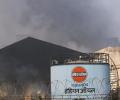
These mega projects, worth about Rs 1 trillion, would boost the economy, ensure smooth supply of petroleum products across the nation and also provide the much-needed relief to people looking to get back to work after the lockdown.
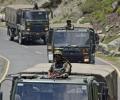
Looking into the current situation on the China boarder, IOC has stocked up enough winter-grade fuel for the region. With army movements increasing, the demand for this fuel is expected to increase multifold from the 350 metric tonnes last winter.
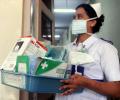
Apart from them, consignments of 11 top importers, including LG, Samsung, Toyota, Honda, and Siemens, will also be allowed entry, relieving them of the 100 per cent inspection rule.

Hetero has priced the injectable drug at Rs 5,400 per 100 mg vial. With More drugmakers in line to launch the drug soon, the prices may see a further erosion.
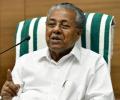
The Kerala chief minister's four years in office may well be remembered for the way he handled Cyclone Ockhi, two floods, Nipah, and now COVID-19, reports Shine Jacob.

A company official said work stopped temporarily only at two rigs and the remaining 34 in the offshore were operational. He added there was no impact on the company's production.
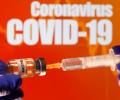
The Hyderabad-based firm will first make the drug available in high case load areas of Maharashtra and Delhi under the brand Covifor. A single dose vial is likely to cost Rs 5,000-6000.
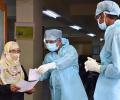
The committee has recommended Rs 8,000-10,000, Rs 13,000-15,000, and Rs 15,000-18,000 including PPE costs for isolation beds, and ICUs with or without ventilator, respectively, to all hospitals. Currently, hospitals are charging Rs 24,000-25,000, Rs 34,000-43,000 & Rs 44,000-54,000 (excluding PPE cost).

Govt has already approached World Bank seeking termination of contract. The progress of the project was just 20 per cent though the contract was awarded in 2016.

The antiviral drug may cost around Rs 55,000 for an 11-dose course, or Rs 5,000 per injection -- much less than the price of imports from Bangladesh, reports Sohini Das.

While freight traffic has gone up, the Google location data shows more people are stepping out of their homes.

Singapore-based Alert Disaster Control, one of the largest disaster management companies in the oil and gas sector, has already joined the team of experts from ONGC and OIL, reports Shine Jacob.
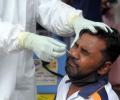
The testing rate is likely to slow down, report Pavan Lall and Sohini Das.
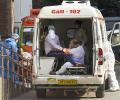
ICMR's serological survey, whose findings will be made public next week, suggests that the rate of contagion may be a lot higher in most-affected cities such as Delhi, Mumbai, and Pune.
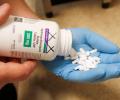
Once touted as a 'wonder drug', HCQ has been battling global controversies around its safety and efficacy as a prophylactic against the new coronavirus SARS-CoV-2.
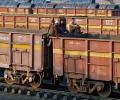
Freight earnings too saw a decline of Rs 8,284 crore to Rs 13,412 crore in the first two months of FY21, compared to Rs 21,696 crore during the same period last year.

OMCs' Digital India move is likely to have an impact on more than 80.3 million Pradhan Mantri Ujjwala Yojana consumers, majority of whom are not exposed to digital transact.
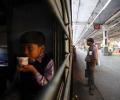
Railway traffic has dropped 32 per cent to 99.86 mt between April 1 and May 14, compared to the same time last year, while its revenue, too, dipped 41 per cent to Rs 9,094.38 crore.
